
Buffel report launch rehashes long-known facts
Yesterday’s online “national launch” of Buffel Bulldozer dealt with facts that have been in the public arena for decades, presented virtually no researched, costed solutions for dealing with the infernal weed (except declaring it as a weed), and failed to include two major players – the tourism and pastoral industries.
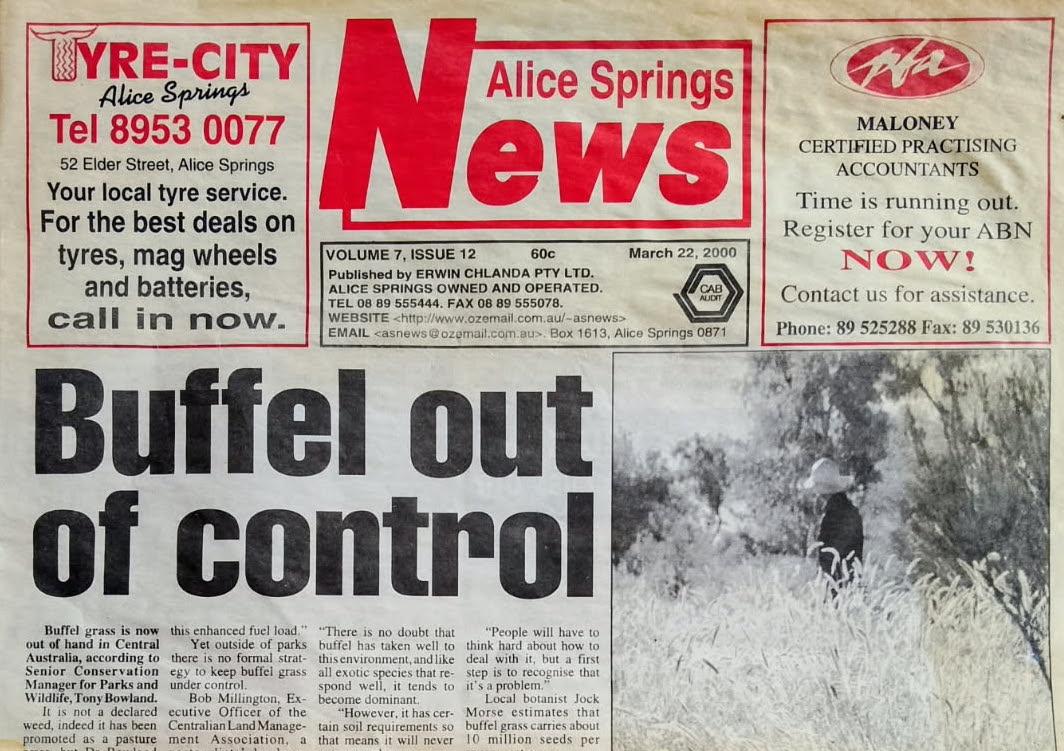
Alice Springs News, 22/3/2000
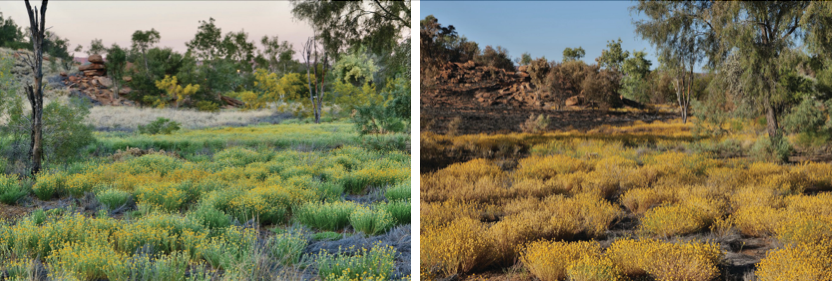
Tourism clearly wants to prevent our magnificent landscape from being turned into a grey, bland monoculture, and fuel for horrendous wildfires.
And the pastoralists tell us they have a commercial need for buffel, notwithstanding a Charles Darwin University economic impact report. It claims that invasive buffel causes net economic and environmental losses in the NT, with external costs exceeding benefits by roughly 60 to 1.
Not having the cattle industry at the table has made it easy for NT Environment Minister Joshua Burgoyne to give exemptions to pastoralists, turning the long overdue weed declaration into a farce.
“Buffel knows no boundaries” is a frequent statement in the campaign.
Over the years it has become clear that buffel cannot be entirely extinguished with currently available measures.
However, regeneration areas can be established, perhaps around favourite locations in the parks, where native plants can return, create seed banks and become the foundation for return to the region’s pristine environment.
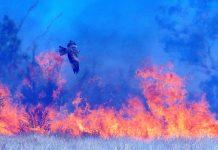
That kind of forward-looking was absent from the launch although The Centre is rich in talent to make it happen – people like Peter Latz, Dr Fiona Walsh and Mike Gillam whose superb photos enliven the report (photo at top).
Yet the speakers’ general tenor was to clamour for public money from governments which for decades could not care less about buffel, including Canberra.
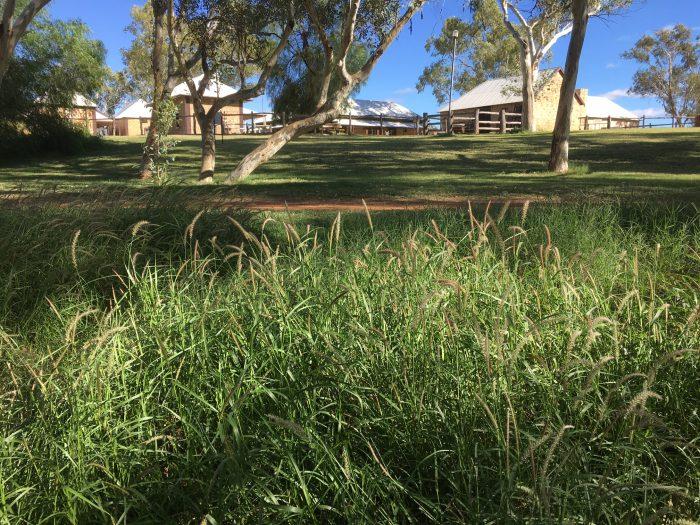
Mayor Asta Hill said the town was “choking” in buffel. Just slashing the creek sides costs $3.9m – 10% of the budget “but we cannot walk away from it”.
Eastern Arrernte woman Camille Dobson from Ltyentye Apurte (Santa Teresa), said smoke and pollen from buffel threatens health. The weed now covers 50% of the area.
Rangers – “the lowest paid Central Land Council employees” – are in the forefront of fighting buffel, says Ms Dobson.
Consultation was inadequate and took place during the summer when locals were engaged in business (traditional activities).
Taigen Ryan, Kalkadoon woman from the Invasive Species Council, QLD, spoke of people blocking a Federal enquiry.
Dr. Ellen Ryan-Colton, Ecologist from the Flinders University SA, is doing a PHD about the impact of buffel on the APY lands in the top of SA.
“I can’t see the tracks anymore because the grass is so thick,” is what people looking for bush tucker are telling her.
What happens to ants, reptiles and birds liking open space is part of her research, and the “devastating” impact on birds that partially forage on the ground.
“They are dropping out.”
Places that are not yet fully invaded need to be mapped: “Where is it heading to next? So we can inform places like Victoria to get onto it.
“Heavily impacted places like Central Australia now have the responsibility to tell that story and help out our cousins in other parts of Australia not experiencing the same impacts.”
Dr. Ryan-Colton says: “The next thing we want to work on is looking how to decouple that fire cycle.
“Can we do anything to reduce that dry biomass and make it not so flammable, stop the large fires in buffel areas.
“That can involve technical research that we are ready to do. We want to understand fire behaviour.
“We’ve got fire agencies already speaking to researchers, saying we want to know how hot it burns, what’s the fuel load, how fast does it spread.
“Will we beat this grass?”
Emerging social issues will require big management, government and policy systems still facing “roadblocks” across the nation.
The launch was strictly a one-way affair. The facility for two-way conversations was not used. Questions had to be submitted in writing and few of the 85 people watching did.
Jimmy Cocking: Can we consider genetic approaches rather than just biological control, for example, terminator genes in patented crops for work at scale?
Dr Ryan-Colton: Absoultely. We need to consider non-classical "biological" techniques – like native termites to eat the dry biomass, something native that stops seed set.
2 comments
Deidre
The zoom meeting to discuss the issues around buffel grass was okay but there wasn't anything new that came up.
I was relieved that it didn't focus on blame or should haves because these are futile. Can't change the past but we can influence the future.
I did feel however that it was a one-sided representation as it did not include anyone who is pro buffel. Even though personally, I cannot find one redeeming feature of this grass, not making room for all sides of the story, I feel, is a form of censorship.
I have researched buffel grass on a personal level and it breaks my heart seeing how it is raping our country of its fauna and flora and even if a pastoralist was given space to share their story, I do not think any argument pro the grass would change my view of how insidious this grass is.
I don't know but when a stakeholder is not given equal time and space to present their view it gives the impression that there is something that the "others" are hiding or are not willing to admit.
You more than anyone would be aware of this concept.
All up though, it was an okay session as an overview. Anyone can walk out their door here in Central Australia and see the effects this grass is having on our flora and fauna. This grass is taking the life and colour out of our land.
In addition, I used to make paper by recycling waste paper. I have started this process again but instead of just making recycled paper, I am looking into how to use plants to make paper. I thought I would use the buffel grass which means in my own small way, when I collect the grass, I will dig up the entire plant and remove it from it's original site. I am not far off from the experimentation phase of using this grass.
Adrian Tomlinson
One point I disagree with you on is the need to include a pastoral industry in this report. Would you invite the fracking industry to contribute to a report highlighting the problems with fracked gas?
The government has a duty to consider all sides – it is not for the community to invite powerful industry groups to contaminate their arguments with industry bs.
I do think however that reports like this need to do more to investigate and debunk the arguments the pastoral industry puts forward for buffel (economic value, false claims about stopping erosion and nutrition).
The other player underrepresented is health. The solutions have also been on the table for a decade in the existing Federal buffel threat abatement advice. The scandal is why is this advice being ignored?