
Cattle or tourists: The buffel debate nears deadline
COMMENT by ERWIN CHLANDA
The debate about buffel needs to be broadened to take account of the weed's current and future commercial as well as social consequences.
The pastoral industry, in love with the irresponsibly introduced plant, has leases over half of the NT, land that is owned by the people of the Northern Territory.
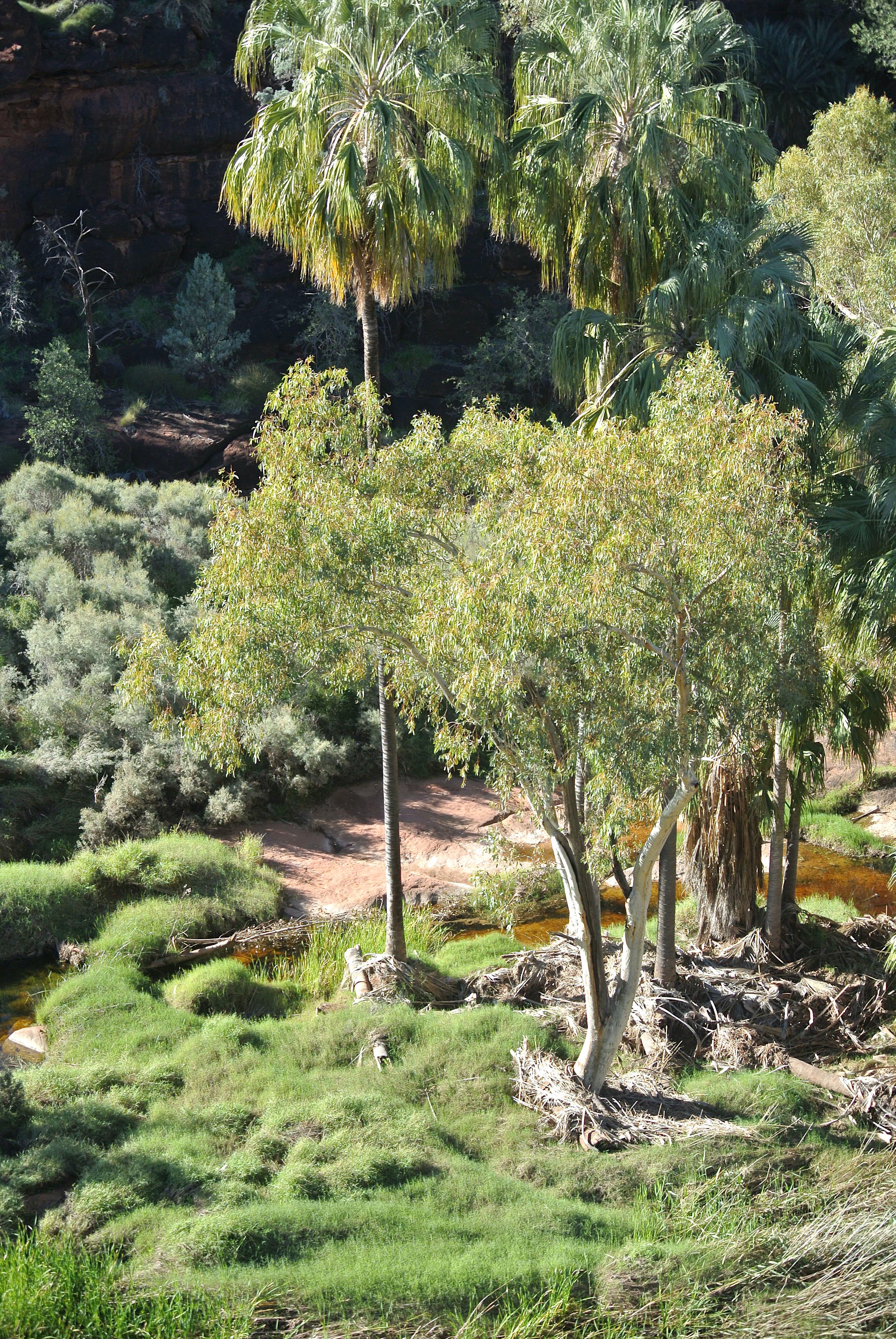
AT RIGHT: Buffel in Palm Valley, 2016.
From tomorrow they will have just 43 days to comment on how the government should be dealing with the scourge, declared a weed in 2024, yet still expanding in the region's prime tourism areas.
The cattle carrying capacity of land in The Centre is two beasts per square kilometre.
Would cattle land, or a good slice of it, not be far better used for tourism which is hugely more labour intensive, while being environmentally sustainable?
Is the current government prepared to risk the destruction of the very major asset underpinning that industry – nature?
Eminent botanists have, for decades, made it clear that buffel may turn The Centre into a ghastly monoculture which no-one would come and see.
Yet the 13 member government appointed committee, looking at how to manage the scourge, does not include a single tourism representative.
Meanwhile four cattle industry spokespersons are getting a voice, alongside bureaucrats and NGOs, putting on the table a system allowing the Minister open slather to expand vast areas under buffel.
It was declared a weed in July 2024 under the Lawler Labor Government.
The current minister, Joshua Burgoyne, is an electrician by trade, an honourable skill but unlikely to equip him for the task he is facing.
But there is no doubt he is up to speed with political tricks, announcing a do-or-die decision a couple of days before Christmas and giving the public six weeks, during which many will still be on holidays, to make and argue for a decision of vital importance to their future and that of their children.
The elephant in the room may well be dollars: Hard figures of tourism vs pastoralism revenue in The Centre are difficult to get but seem to be “about the same”. $850m is a common assumption.
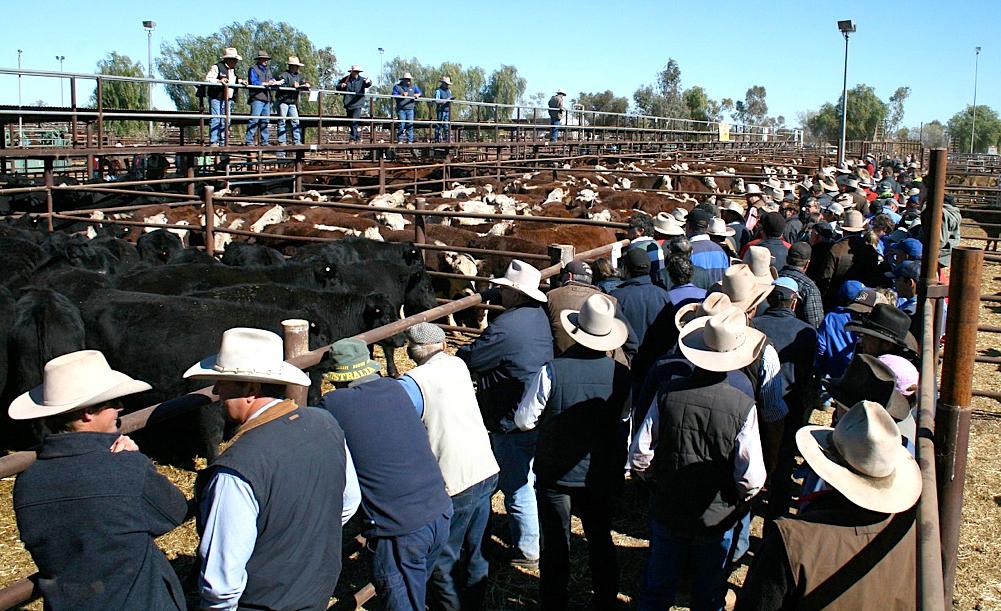
Cattle are 24 to 36 months old (which averages two and a half years) when they are put on the market.
In the Alice 2025 Show sales Hereford steers, weighing around 450kg, were sold for $4.54/kg live weight, just over $2000 per head.
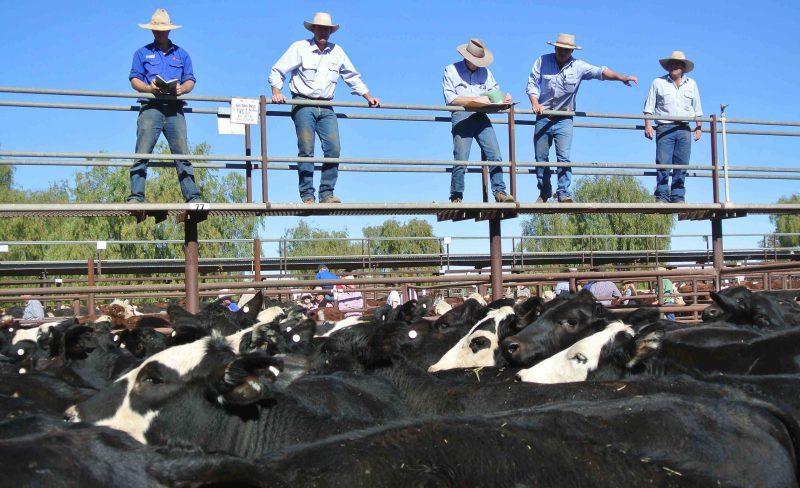
Finished / slaughter cattle aged 24 to 36 months weigh 520kg plus.
Given the poor carrying capacity of land in The Centre, just two beasts per square kilometre, the productivity of a square kilometre of pastoral land is a paltry $1600 per year.
Compare that to how many tourists could be “run” in a square kilometre.
For example, in groups of 10, camping in dry creek beds, cooking on the open fire, sleeping in swags under the stars, surrounded by the variety of grasses and trees that are home to birds whose songs will wake them in the morning, being immersed in the freedom of the bush, all that is for overseas and urban visitors an experience much better than being crammed into camping grounds.
Just ask any local!
Ten such groups in a square kilometre would still not be a crowd. 100 people, for example, at $250 a head, would result in a turnover of $25,000 a night.
At a 50% “occupancy” that would amount to $4.5m a year for that square kilometre, a factor nearly 3000 times greater than compared to the use for cattle.
Each square kilometre used in that way would employ at least 20 people full time.
The buffel debate at the moment is a bit like the glass half full or half empty: It is proposed to prohibit buying and planting seeds for buffel without a permit.
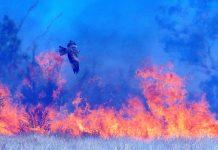
But that also means permits can be issued to perpetuate the spread of an imported plant that “supports intense fires, quick regrowth supports frequent subsequent fires [which] impact many native trees and fire reduces the overstory and top feed in woodlands,” as the NT Government itself declares.
The Buffel Grass Management Strategy: Central Australia 2024 – 2030, in which the word permit is mentioned just once, recently morphed into the Draft Buffel Grass Weed Management Plan 2026 – 2036 in which it occurs 25 times.
That document is now open to public comment until February 12.
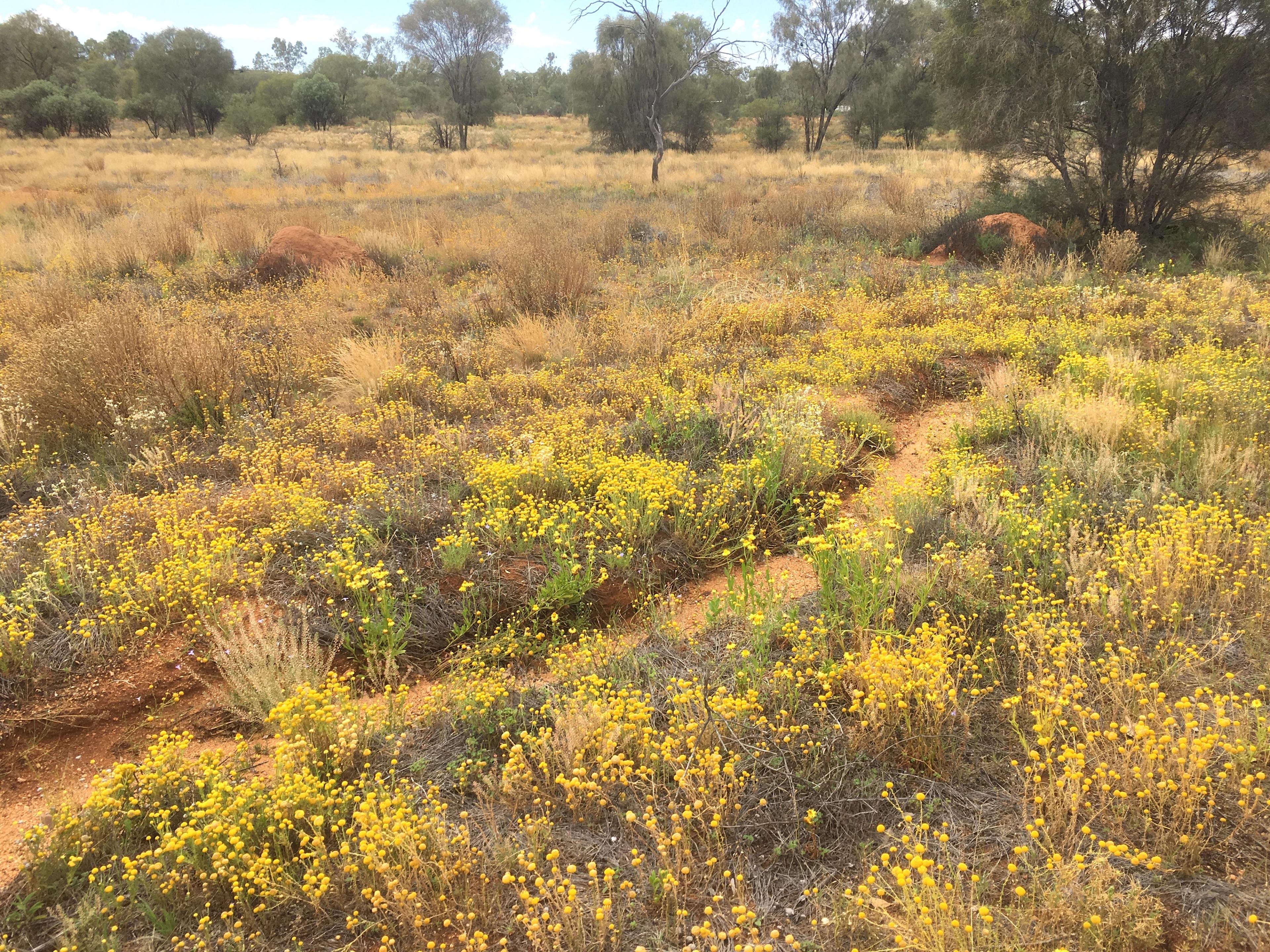
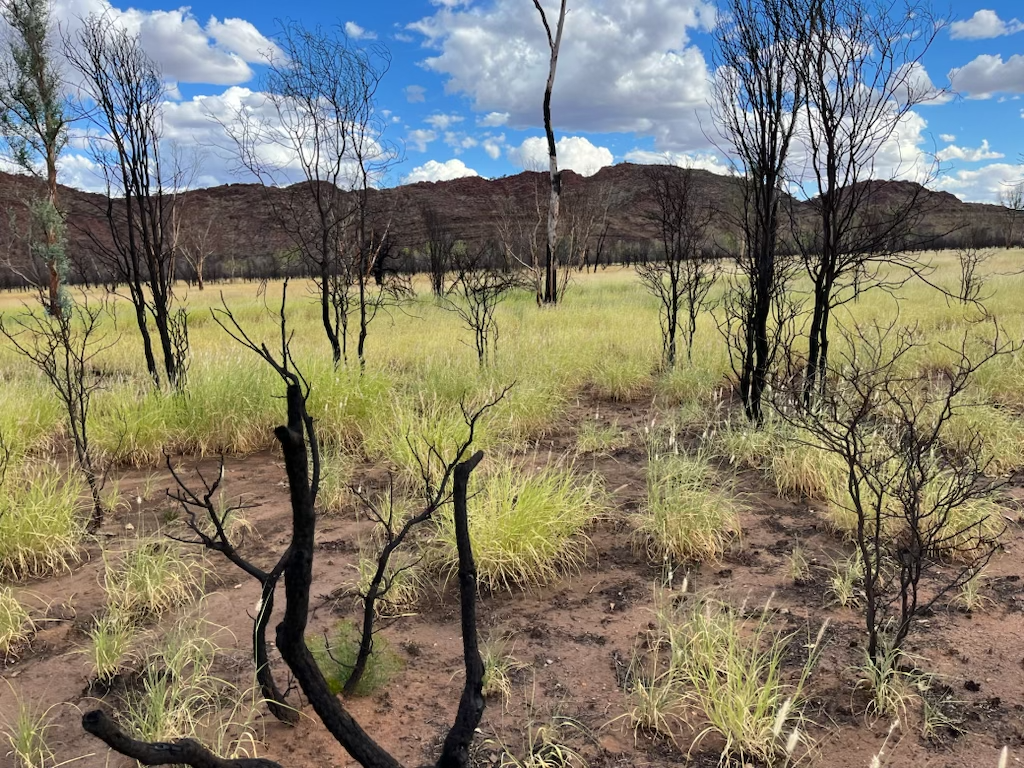
ABOVE: Eastside locals have returned land at the base of Spencer Hill to the way it looked before buffel.
Confusion reigns: On December 11, 2025, Mr Burgoyne’s department announced that he “has approved the first ever draft Buffel Grass Weed Management Plan for public consultation”.
In fact nine months earlier, on March 14, 2025, the department invited the public: “Buffel grass management Have Your Say Now Open”.
It is likely that penalties connected with buffel will come under the NT Weeds Management Act 2001: “Breaching general duties to manage weeds constitutes a level 3 environmental offence.”
For individuals that will attract 77 to 770 penalty units.
Between July 1, 2025 and June 30, 2026 a penalty unit is $189.
That means individuals copping the top level will be up for $145,530.
For companies a level 3 environmental offence would attract between 385 and 3,850 penalty units.
That means the top company penalty would be $727,650.
A great incentive to fight buffel – unless, of course, you get the Minister's OK to do whatever you like.
10 comments
Andrew Beattie
Dramatic and damning evidence for the mismanagement of land by encouraging a grass monoculture is seen in the grass fires in Victoria where the fire fighters are on record saying the fire spread so rapidly and widely that they could not keep up with them or save property, livestock or human lives.
A sure sign of bad land management: a grass monoculture.
Marie Purvis
Do you realise our world is continually evolving? Nothing ever stays the same. There is global warming and continental drift and the like to consider. The flora and fauna are continually adapting. Sadly some shallow rooted plants are not coping well and are slowly diminishing. Just when we need more ground cover to help insulate our warming planet. However in the short term I am hopeful the symbiotic relationship between tourism and pastoralism can continue.
Ralph Folds
There is no symbiotic (both benefit) relationship between pastoralists and the tourist industry. Tourism needs our natural environment that is destroyed by buffel and its negative effects on the environment far outweigh any ground cover benefits in in climate change mitigation.
It decreases the natural ecosystem carbon storage and speeds up global warming. Buffel out competes native species, reduces biodiversity and degrades the environment.
There seems to be a widespread ignorance of the destructive impact of buffel. Kathy even proposed opening up the whole of Central Australia to cattle grazing. As Jacqueline Arnold suggested “swing through Camooweal for a reality check”.
Cattle grazing has trashed the natural environment of Camooweal through land degradation, water pollution and habitat destruction. The pungent odour of cattle is pervasive.
Adrian Tomlinson
It is very troubling that the 43 days to make comment on the draft buffel weed management plan that you mention are timed over the summer holidays when many of us are away.
Shockingly, the NT's Program Manager-Buffel Grass, the officer in charge of drafting the plan and leading the consultation is one of those who are away! Their "out of office" tells me they will be back on Tuesday 20 January.
There is a long standing tradition of the NT Government and Ministers releasing contentious documents and applications for comment over the summer. Ideally this is done late in the week to avoid the weekly media cycle.
In 2024 the Mataranka water allocation plan was gazetted on 17 December. There was also a plethora of land clearing applications advertised.
This year, as well this draft buffel weed management plan, two of the largest groundwater licence applications that the NT has seen, Tandyidgee station (7290 ML/yr) and Newcastle Waters station (3060 ML/yr), both for cotton, have also been advertised for public comment, with submissions due on 13 January 2026.
Anna Dakin
As a small tourism business owner, it’s so hard to understand the prioritisation of pastoralism over tourism. Tourism is a growing industry. The cattle can eat native grasses – they’re actually more nutritious. It’s not like getting rid of buffel = getting rid of cattle. Actively planting buffel is so embarrassing for the Territory – when I guide groups of national and international guests through the region, the buffel grass conversation inevitably comes up. There is so much of it around. I want to defend the Territory – I love this part of the world – but the proposed decisions by this government regarding buffel are indefensible. We declared it a weed, we need to treat it like a weed. Give this inspiring ecosystem a chance to recover.
Jacqueline Arnold
Anyone that wants to live in a town whose economy largely relies on pastoralism should swing through Camooweal for a reality check.
Adrian Tomlinson
Thanks for an excellent article.
You mention a previous "Have Your Say" on buffel conducted around March 2025 – I was one of many who wrote a submission but it seems the results have been buried.
As you point out the conflict with tourism is stark. The conflict with health may be even worse – whether it’s air quality, destruction of healthy country/sites/culture, fire risks, or being able to supplement diets in remote areas with locally sourced healthy foods.
Ralph Folds
Minister Burgoyne is becoming increasingly provocative and that carries risks he may not be aware of.
The introduction of the buffel grass seed caterpillar (Mampava rhodeneura) would have a devastating effect on invasive buffel grass and could be harvested in Queensland and transported here.
Personally, I would like to see this happen but obviously the pastoralists who rely on buffel and support the CLP would not.
Environmental defenders in our community must be sorely tempted to fight fire with fire.
Jon Rose
Dear Joshua Burgoyne - shame on you! You have been seduced by the few people who run the cattle industry in Central Australia - a completely inefficient method of providing food and nutrition for our or any population. You thought you could sneak this (Draft Buffel Grass Weed Management Plan 2026) through while many people were away on holiday?
We are creating a dysfunctional monoculture here based on a 19th century colonial mind set. I assume you have children and expect to have grand children and great grand children? I hope you have your excuses written out and ready for them to explain the coming reductive ecological collapse and why we did almost nothing about it.
I’ve spent much of the last years dutifully clearing my backyard of buffel grass. This noxious weed that has been strangling native flora for decades and like most imported pests, the situation has gone from bad to catastrophic. At least in 2015 South Australia finally declared Buffel to be a weed; up north they are still seeding the f****** stuff because pastoralists only care about profit from their cattle, not environmental collapse.
If you have to eat meat, then FFS eat Kangaroos, at least they adapted to living here! In typical racist nonsense the introduction of buffel has been blamed on the cameleers who created the transportation system of central Australian prior to the motor car. I doubt this is true as that system of communication barely touched the top end.
Regardless, the infestation problem has been amplified by a posse of idiots eg. Alice Springs airport in the 1960s seeding buffel to stop dust storms - as if! They could have planted salt bush which is indigenous and does a similar job of binding the soil together - just grows a little slower - but that just won’t do when we are out to make a quick buck (the main storyline of Australia unfortunately).
As for the tourists industry’s promotion of the Red Centre? Are you kidding? You try finding it around Alice Springs. Most of the hills, dry river banks, kerbsides, and spectacular rock formations are choked with this buffel crap. The only red you will see is over the Simpson desert while flying in.
According to the Invasive Species Council the list of invasive alien plants in Australia has grown to more than 2700, a figure that climbs by about 20 new species every year!
This post is about flora but "we shall not forget" the idiots who gave us the following: Forna (look ‘em up), rabbits, foxes, cane toads, cats, goats, etc.
The list should include those citizens who introduced the following (by name if we can find them):
I’m sure this can be extended but here’s a start:
Privet (Ligustrum vulgare), Lantana (Lantana camara), Groundsel Bush (Baccharis halimifolia), Cat’s Claw Creeper (Macfadyena unguis-cati), Mother of Millions (Bryophyllum delagoense), Red Guava (Psidium cattleianum var. cattleianum), African Olive (Olea europaea subsp. africana), Broad Leaf Pepper (Schinus terebinthifolius), Mist Flower (Ageratina riparia), Formosan Lily (Lilium formosanum), Bleeding Heart (Homolanthus populifolius), Morning Glory (Ipomoea cairica), Sweet Acacia (Acacia farnesiana), Tree of Heaven (Ailanthus altissima), Broom Sedge (Andropogon virginicus), Alligator Apple (Annona glare), Madeira Vine (Anredera cordifolia), Shoebutton Ardisia (Ardisia elliptica), Prickly Pear (Opuntia spp), Ox-eye Daisy (Leucanthemum vulgare), St. John’s Wort (Hypericum perforatum), Paterson’s Curse (Echium plantagineum), Madeira Vine (Anredera cordifolia), etc.
We have to act now on the REMOVAL of buffel, not make joke policy about "licensing" pastoralists to keep seeding it.
Charlie Carter
The calculations do not take into account the cost of producing and transporting the beast to market. The profit margin may be pretty slim, particularly averaged out over several ordinary and bad years.
And of course the costs of the pastoral industry, and the subsidies, that come out of the public purse. The cost of "beef" roads, and roads into cattle loading depots on stations which are maintained by the taxpayer are just one example.
Some analyses suggest that in Central Australia it would be cheaper to remove all cattle, and pay the station owners to control feral animals and weeds, with a much better outcome for the environment and the public purse.
The comparison also does not take into account the vast but uncountable value of the native plants and animals which are put at risk by buffel grass.