
Cheery Beetaloo gas prophesy needs second look
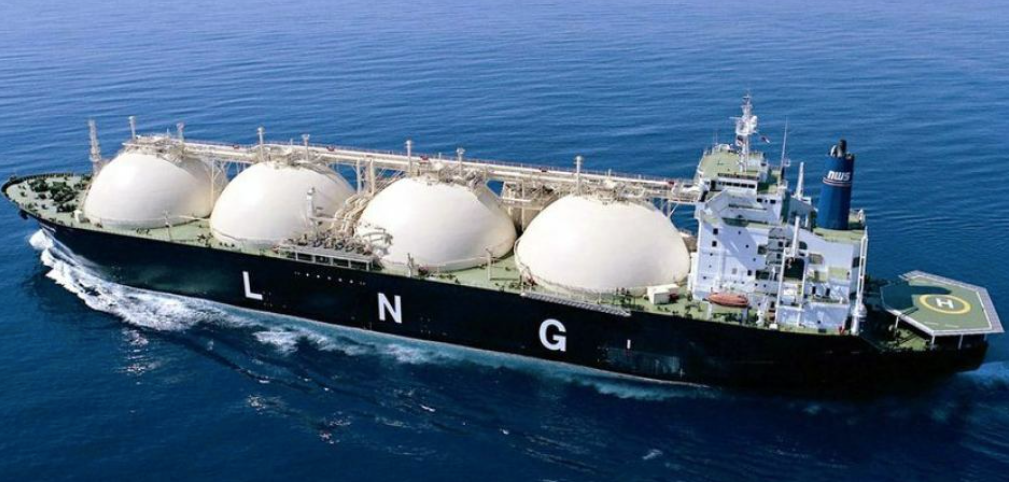
The NT Government’s cheery propaganda about enormous gas reserves in Beetaloo poised to elevate the Territory to unimaginable wealth calls for a second look.
The future of the basin, about half-way between Alice and Darwin, is facing global issues of oversupply, uncompetitive gas prices, reserves being far from markets and opposition from nuclear and renewable electricity.
Kevin Morrison, from the Institute for Energy Economics and Financial Analysis (IEEFA), points to some troubling facts.
Australia is the world’s 15th position for reserves but is the third-biggest exporter, meaning that we deplete our reserves much faster than most.
And the LNG business is its own biggest customer: More than for any other purpose, gas is used to freeze gas for export.
Japan is selling gas it has bought from Australia on the global market because it has too much of it, is stuck with contracts of oversupply. It is further expanding the Kashiwazaki-Kariwa facility, the world’s largest nuclear plant, as the Fukushima disaster is becoming a distant memory.
Electricity supply for the Australian domestic market increasingly comes from rooftop solar.
Mr Morrison says the outrage about gas exports at the expense of consumers in Australia’s eastern states and the failure to put on guard rails are also now being seen in the light of a 50% increase in global LNG supplies.
Japanese companies have invested at least USD10.8 billion over the last two years in unconventional oil and gas production in the US.
China has stopped buying gas from the US and is now Russia’s biggest customer.
Not knowing who the end customer is going to be creates uncertainty for planners of a new field, such as Beetaloo.
If it is ever developed it will be mainly for export and not for domestic supplies.
Mr Morrison says so far it has no commercial proof of its reserves: “The work so far has been exploratory, potentially there could be gas, three kilometres below the surface.
“The proponents of Beetaloo gas have adopted a strategy of build and they will come at a time when there are more risks associated with the outlook for global gas demand.”
Beetaloo seems a long way from taking the $15 billion deficit off NT Treasurer Bill Yan’s shoulders.
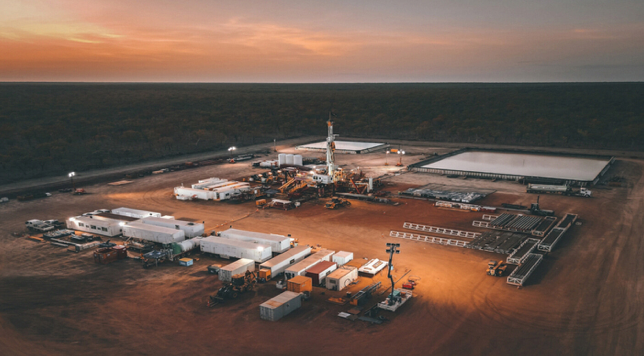
PHOTO: Beetaloo gas, if it ever sees the light of day, will be mainly for export and not for domestic supplies.
5 comments
roger colman
Let private enterprise decide on economic viability rather than arm chair modelling. If they succeed with a profitable operation, we all win.
Randall Coombe
It would be a good idea Roger, if private enterprise funded the whole project, instead of using several hundreds of million dollars of taxpayer funding.
Also be good if private enterprise payed some substantial royalties for the taxpayer owned resource.
Also be good if private enterprise payed some tax on the enormous revenue they make from these ventures, instead of bugger all.
Also be good if private enterprise prioritised affordable gas to Australian customers, instead of their focus on overseas supply.
Frank Baarda
@ Roger.
I like your enthusiasm "we all win".
One of the promoters of Beetaloo gas, Tamboran, some years ago moved its headquarters to Delaware (USA). I believe that soon after Elon Musk shifted from Delaware to Texas, Tamboran also moved to the Lone Star State. These moves are clearly designed to avoid regulations and taxes.
If the Beetaloo gas bonanza goes ahead some will be much bigger winners than others. The environment will certainly not win.
Frank Baarda
In 1973 I worked for Central Pacific Minerals (CPM) that was searching for uranium in the Ngalia Basin (Yuendumu lies at the northern margin of the basin).
Magellan Petroleum Australia held a 10% interest in the Ngalia Basin Joint Venture. Magellan owned the Palm Valley gas field (discovered in 1965). CPM held leases on the Jinka Plains fluorite reefs (not sure when and by whom discovered).
The modern whitefella dreamtime (thank you Alex for this phraseology) concept was to use Palm Valley gas as an energy source to produce uranium hexafluoride gas to be centrifuged to produce enriched uranium. (Either for nuclear fuel or weapons – take your pick)
The dream never came to fruition. Magellan Petroleum Australia and CPM ceased to exist. The Ngalia Basin uranium and Jinka Plains fluorite remain in the ground.
Alex Nelson
The Beetaloo gas development project will join the long list of other major concepts for more than a century envisaged to lift the NT into economic nirvana. Almost 40 years ago, the NT government (then CLP) was strongly advocating for the development of a nuclear fuel cycle industry based in the Territory. The vision touted back then was that this industry alone would end Australia's balance of payment deficits, remove the need nationally for personal income taxation, and the NT would be equivalent to world nuclear energy what Saudi Arabia meant for oil. In the Northern Territory more than most, we live in an age of the modern whitefella dreamtime.