
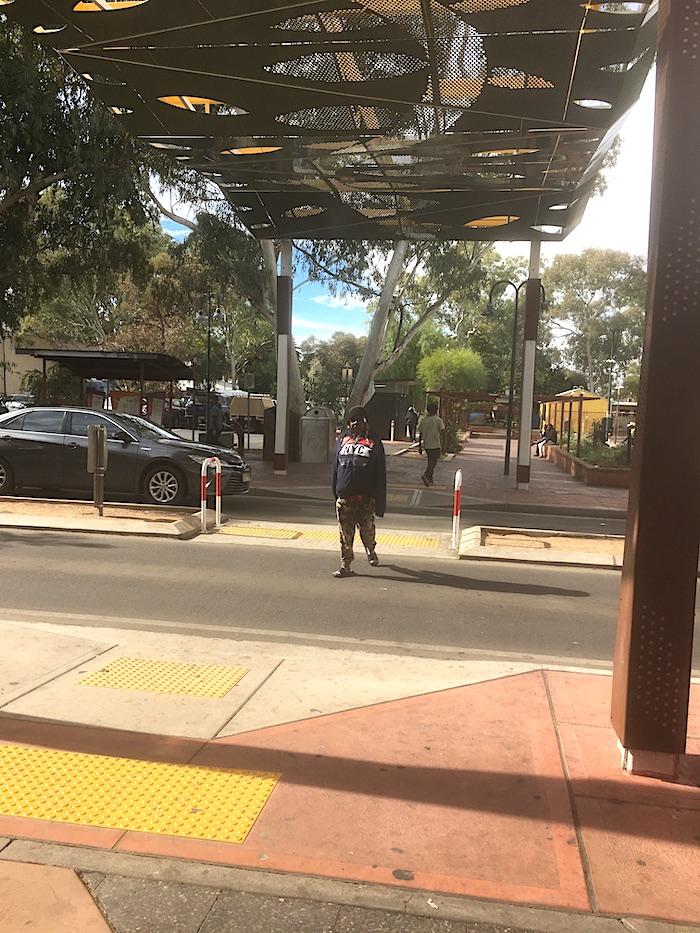
Is it a pedestrian crossing or is it not?
A poll by the Alice Springs News showed 80% of people think it is. The council says it is not. A bad accident waiting to happen?
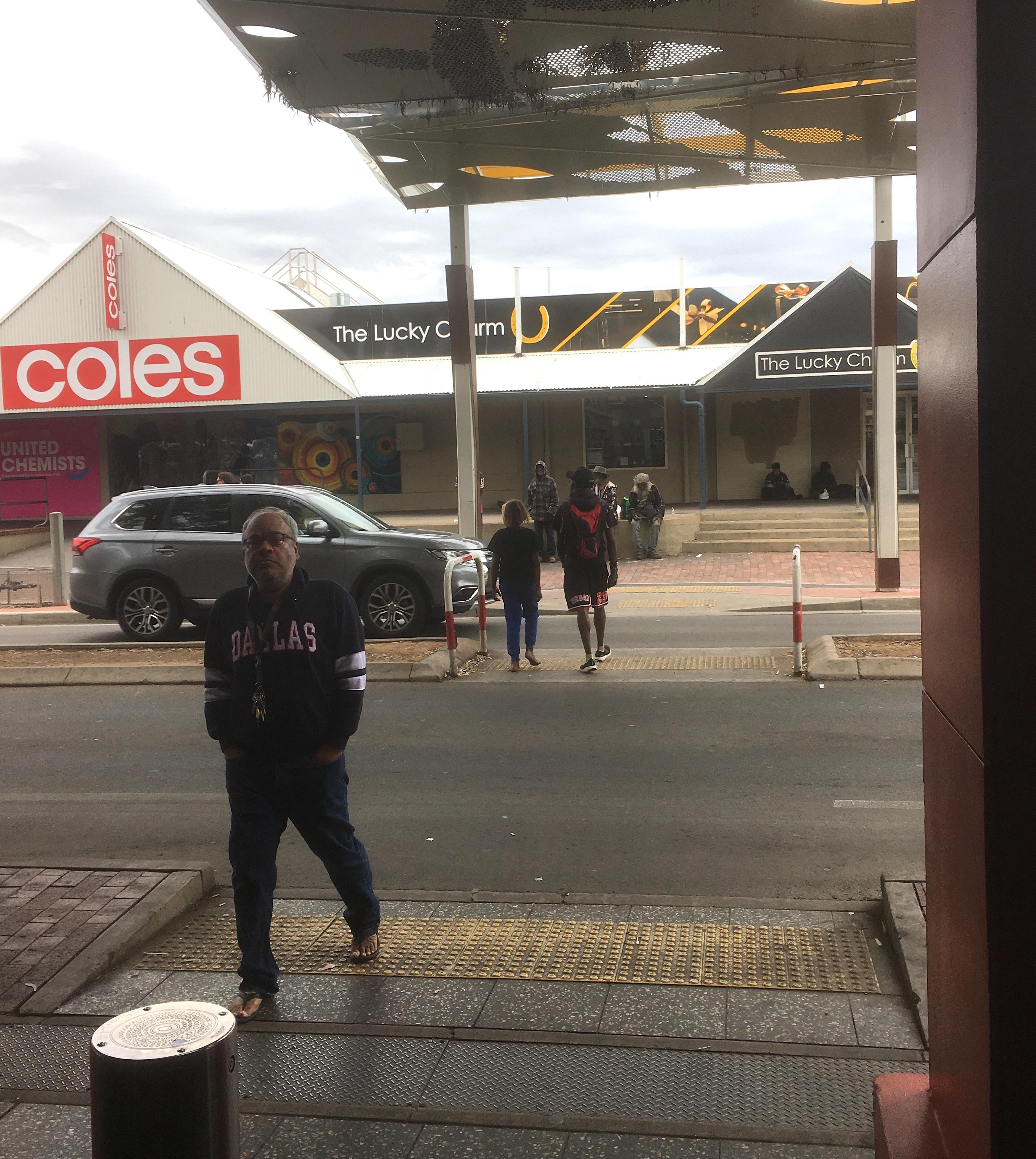
No, it is not says the town council.
Yes it is said eight of 10 people I spoke with last Saturday: "Cars have to stop."
One said he isn't sure and one said it's definitely not a pedestrian crossing. Cars don't have to stop.
It seems a classic case for a serious accident waiting to happen.
15 comments
Frank Baarda
It comes down to if you prefer a world of strictly applied rules and regulations (and punishment for breaking them) or a world where people slow down and give a wave and a smile and cede right of way and sacrifice a few seconds in doing so.
Road unrage!
As for: “It seems a classic case for a serious accident waiting to happen.”
One could say the same for the Finke races. I for one am glad they hold them despite the risk.
I recall that in "The God of Small Things" the twins believe that if you get killed on a zebra crossing, the government will pay for your funeral.
Yeh
If there are no zebra lines, it is not a pedestrian crossing.
The number of drivers who randomly stop traffic to wave pedestrians across is astonishing. You're not being polite, you're creating a dangerous situation that nobody else is expecting.
The road rules exist for a reason. Other drivers expect traffic to behave predictably, not have someone suddenly stop in the middle of the road to perform a good deed. All it takes is one driver behind who isn't expecting an unnecessary stop, and you've created a serious risk.
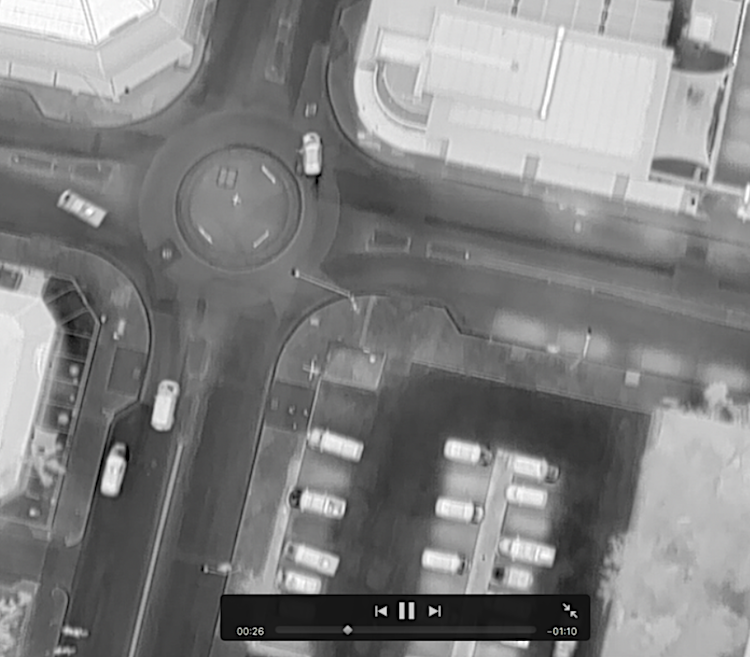
The same applies at roundabouts. Not a single roundabout in Alice Springs has a marked pedestrian crossing, yet some drivers insist on stopping at entries and exits to wave pedestrians through. All you're doing is disrupting the flow of traffic and creating confusion for every other road user.
Drive according to the rules, not your feelings. Roads are safer when everyone is predictable, not when individuals decide to invent their own traffic laws.
Ralph Folds
@Yeh: In remote communities where many crossing users originate, the rule is simple: cars yield to pedestrians. When those residents bring that expectation to our town's crossings, it creates a collision risk — both parties believing they have the right of way.
In that moment, the driver carries a general duty of care, zebra stripes or not. Giving way isn't creating a dangerous situation that catches everyone off guard. It's defusing one — by doing exactly what many pedestrians already expect.
Yeh
Alice Springs isn't a remote community, and even if it were, road rules don't change based on what someone may have become accustomed to elsewhere.
Children are taught basic road safety in primary school. That includes understanding where pedestrians have priority and where they don't.
If we start encouraging people to ignore the road rules because some pedestrians might expect vehicles to stop, we're only reinforcing unsafe behaviour.
You're arguing that drivers should give way because pedestrians may incorrectly assume they will. I'd argue the opposite. When drivers randomly stop where there is no crossing, they teach pedestrians to expect that behaviour and create a false sense of security.
That's far more dangerous in the long run.
Of course drivers have a duty of care. Nobody is suggesting drivers run people over. A duty of care means being alert, avoiding collisions and driving safely.
It doesn't mean inventing your own right-of-way rules or treating ordinary sections of road as pedestrian crossings.
The road rules are clear: if it isn't a pedestrian crossing, then it isn't a pedestrian crossing.
Drivers deciding to create their own rules doesn't improve safety; it creates inconsistency, confusion and uncertainty for everyone else using the road.
Ralph Folds
The clear majority of pedestrians believe they have right of way at this crossing and that belief is not going to change no matter how drivers behave.
Suggesting that drivers simply refusing to yield will somehow produce a safer crossing is wishful thinking. Many drivers will continue to stop anyway, if only to avoid ploughing into a steady stream of people.
The result is a dangerous mismatch of expectations. Pedestrians assume priority or trust that traffic will stop.
Drivers see no zebra markings, recognise no legal obligation, and proceed accordingly. That gap — between what pedestrians expect and what the law actually requires — is precisely where accidents happen.
The crossing needs to be brought into line with the reality on the ground, not the other way around.
John Wriedt
Very true. Well said!
Ralph Folds
@ Robin Hall: You are probably correct that the historical accident data doesn't reflect current risks but that data is not relevant.
For many years these crossings were ambiguous. Pedestrians were uncertain and cautious, and that wariness provided a degree of safety.
But recent upgrades have changed everything: the overhead canopy, redesigned road geometry, and other improvements now clearly signal to people that these are pedestrian crossings.
Most people believe they have right of way — yet the Town Council maintains they are not formal crossings and carry no such legal protection.
These crossings are now significantly more hazardous than they ever were in their ambiguous past. Further clarity should emerge once the Town Council's bureaucratic machinery manages to produce a response.
Robin Hall
Having spent a few years in Alice and driven and walked over those crossings numerous times, it would be interesting to know what the accident rate at them is over the years they have been there. The danger they present is probably not backed up by the data. I agree that they are confusing.
Ralph Folds
I have been following up with the Town Council. You would think that the concern shown in our town about these confusing and dangerous crossings would have caught its attention. Surely the CEO would be onto this and ready to address the problem or at least respond to queries. But no! The CEO has to wait for ASTC's director of infrastructure to return from holidays. We can only hope that no one is injured or killed in the meantime.
kathy
Pedestrian crossings are usually clearly marked.
These council crossings are very deceiving and dangerous to both walkers and drivers.
Also a hazard as no-one knows who is to give way to whom.
As for the cover over the road, a real joke.
Damon
Only recently Town Council performed work on Hartley Street at considerable expense including installing shading over 2 "pedestrian crossings" connecting Yepereyne to the car park. Yet they did not install any markings or signage on the street to indicate to drivers that these indeed are pedestrian crossings and so drivers should give way.
Some drivers (including me) give way because it is the right thing to do. Many others don't, for whatever reason (inattention, arrogance, etc). None of this excuses Town Council from not making the crossings safer by making the situation explicit.
Ralph Folds
The more the Council makes them look like pedestrian crossings (while saying they are not) the higher the legal risk they expose us to, along with the breach of duty of care the Council has to residents. This is a long standing issue that is way overdue to be addressed.
Tahnee
Same as the one from Yip to carpark on the walk to Todd Mall. Half the cars stop for people. Half the time people walk on it like a pedestrian crossing. It makes sense for them both to be pedestrian crossings and marked out.
Ralph Folds
Would a reasonable person believe that this — and others like it in the CBD — was a pedestrian crossing? The answer appears to be yes.
The Council has created a dangerous and misleading situation that could place pedestrians and motorists at serious risk. Should a serious accident or fatality occur, ratepayers may ultimately bear the cost of negligence claims, breaches of duty of care, and public liability lawsuits arising from the Council’s failure to provide clear and safe road infrastructure.
Yeh
I'm sorry, but a reasonable and responsible person knows the road rules. These locations are clearly not pedestrian crossings. They have no zebra markings, no pedestrian crossing signage, and the Council itself has confirmed they are not pedestrian crossings.
The real danger isn't that people mistake them for crossings. The danger comes from drivers deciding to treat them as crossings anyway and suddenly stopping traffic where nobody is expecting them to stop.
That creates confusion for other motorists, increases the risk of rear-end collisions, and creates a situation that other road users are not anticipating.
Worse still, it teaches pedestrians to expect vehicles to give way where there is no legal requirement to do so. Pedestrians can be lulled into a false sense of security, assuming that because one driver has stopped, all drivers have seen them and will do the same.
That's exactly how people get hurt.
Road safety relies on predictable behaviour, not individual drivers deciding which sections of road should function as pedestrian crossings.
If a location is not a pedestrian crossing, then treating it like one doesn't improve safety. It creates uncertainty and increases the risk for everyone.