
Letter from Malarndirri McCarthy
Only El Salvador imprisons more people than the NT


LETTER TO THE EDITOR
Since the election of the CLP, the Northern Territory has imprisoned more of its citizens per capita than almost any other jurisdiction in the world, second only to El Salvador.
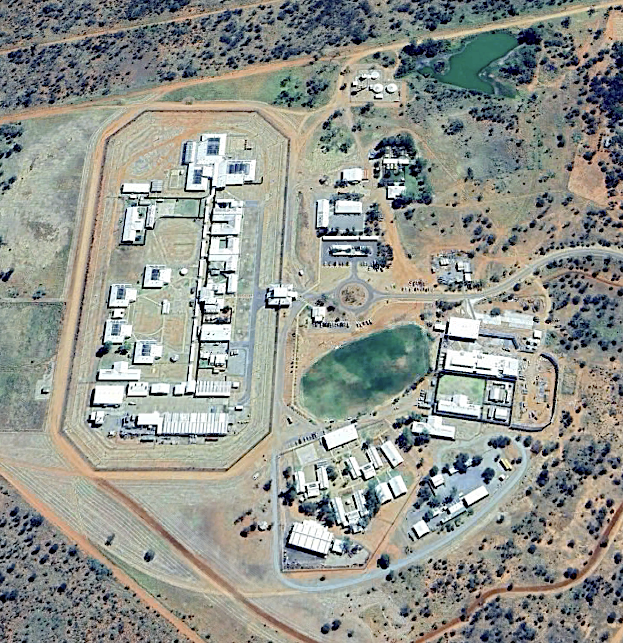
A more than a $1 billion private prison is on the way to accommodate the ballooning prison population.
With almost 2,900 inmates behind bars, the system is overstretched, services aren’t being delivered and conditions have been condemned as “inhumane” by the then Acting Northern Territory Ombudsman Bronwyn Haack.
No one objects to violent criminals being locked up, but what we are seeing in the Territory is mass incarceration on a scale we’ve never witnessed before.
It’s a social experiment that will have devastating intergenerational consequences.
Prison is a core part of the justice system, but without wraparound services and prevention programs you don’t get the behavioural change needed to stop people going back in.
The National Agreement on Closing the Gap, which all state, territory and federal governments agreed to with the Coalition of Peaks (the representative body of more than 800 Aboriginal community-controlled organisations), commits governments to reducing the overrepresentation of Aboriginal and Torres Strait Islander people in prison.
That doesn’t mean, as was incorrectly asserted in the NT News on the 31st of October, that we want violent offenders let out of prison.
What we want is for the drivers of crime, including poverty and inadequate access to education and social services, to be addressed. Vitally, we also want diversionary and justice reinvestment programs to be properly funded and supported.
Do that, and you’ll lower the prison population. Do that, and you’ll lower the number of crimes committed and victims created.
What we are seeing in the CLP’s social experiment is the opposite of this: lock people up first, deal with the consequences later.
The latest Australian Bureau of Statistics figures show that the Northern Territory imprisons 1,380 people for every 100,000 adults, compared with a national average of just 228.
Over the next few years, we are going to see these people cycle through the system. Will this improve crime statistics for Territorians? Will it create fewer victims? The evidence suggests it won’t.
In my role as the Federal Minister for Indigenous Australians, I must focus on what I can do to try to remediate some of this damage.
It’s why we signed an agreement that will see $80M under the Northern Territory Remote Aboriginal Investment Agreement (NTRAI), go directly to Aboriginal community-controlled organisations, instead of the NT Government.
This is in line with the Closing the Gap Agreement’s Priority Reforms, which all governments agreed to, prioritising community-controlled organisations and funding them directly to deliver services.
Because we know that when communities are supported and empowered, they have solutions.
We’ve seen it on Groote Eylandt, where community-led justice initiatives, including the Community Justice Group and Community Court, have helped drive a dramatic reduction in offending.
The Anindilyakwa Land Council reported that recorded offences fell from 1,041 in 2019 to just 130 in the year to mid-2025. Youth offences fell from 267 to just 28 over the same period.
This is what happens when communities are empowered to develop local solutions that address the causes of crime.
Responsibility for the justice system sits squarely with the Northern Territory Government. Its policy of mass incarceration and the construction of a private prison will have a devastating intergenerational impact.
While I’ll continue to do all I can from the Federal Government to support communities directly, the Northern Territory Government must be reminded that it governs for all Territorians.
NT Senator Malarndirri McCarthy
Minister for Indigenous Australians


1 comment
Michael
For over two generations we have had a half dozen supported and empowered Aboriginal community controlled organisations, so why don't we enjoy intergenerational solutions?
Aboriginal families have access to good education, employment, and social services, so why do they see no point in using them? Why don't our politicians, bureaucrats, organisations, statutory agencies and leading families work hand-in-hand to solve this, instead of ruthlessly competing for funding and political influence?
Because they have learned to game the system for their own immediate benefit, and don't care beyond that.