
Letter from Jem Wilson
Poor results for water, cash grants
The new Northern Australia Conservation Alliance says the long-running push to “develop the north” continues to direct public money and water towards industrial projects with poor economic, social and environmental outcomes.
LETTER TO THE EDITOR
The newly formed Northern Australia Conservation Alliance will fight to protect the landscapes, nature and liveability of the North in the face of climate change disasters and the biodiversity crisis.
Its report Australia’s Great North: A Global Treasure documents how the long-running push to “develop the north” continues to direct public money and water towards industrial projects with poor economic, social and environmental outcomes.
The alliance is calling for investment to be redirected towards community water security, First Nations-led water governance, climate resilience and the protection of northern Australia’s free-flowing rivers, wetlands and the Great Barrier Reef.
The report identifies a pattern across the north of massive groundwater licences and subsidies to facilitate development at the expense of communities and the environment.
In Far North Queensland, the proposed Lakeland Irrigation Area Scheme is estimated to cost approximately $2 billion but has a benefit-cost ratio of just 0.13-0.37.
In the Northern Territory, the now-quashed Singleton licence would have allowed a private developer to extract up to 40 billion litres of groundwater a year for 30 years, without a volumetric charge for the water.
In Western Australia, more than $1 billion in public money has been spent on the Ord River Scheme, with economic analysis cited in the report estimating a return of around 17 cents for every public dollar invested.
The report also documents the threats that fracking and associated water extraction pose to the Beetaloo Basin, Mataranka Springs and the Martuwarra Fitzroy River catchment in the Kimberley.
It comes a year after the National Climate Risk Assessment warned that climate hazards will worsen in northern Australia under all plausible futures. It found that the risks to communities could reach very high to severe levels by 2050 [while] El Nino is now underway and is likely to increase the risk of heatwaves, hotter days and fire weather.
The report calls for federal funding mechanisms - including the National Water Grid, the Northern Australia Infrastructure Facility and Infrastructure Australia - to be reviewed to ensure that public money is not subsidising damaging large-scale irrigation and fossil fuel projects.
Jem Wilson, Senior Media Specialist, Environment Centre NT.
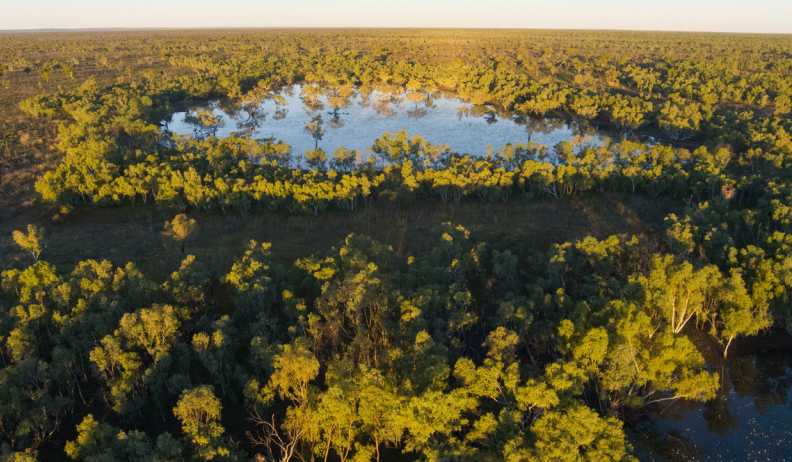
PHOTO Singleton Groundwater, © Mike Gillam
Comments
No comments yet. Start the conversation.