


Rich in culture and cash
By ERWIN CHLANDA
More than 30 groups of Aboriginal artists spread across some of the world’s most remote places have grown into a major economic force in Central Australia.
The 35th annual Desert Mob festival in Alice Springs under way now at the Araluen Art Centre until October 25 is the prime event of the movement that trough art, is bringing millennia old stories, traditions and beauty to an amazed world.
And it is happy to pay for it.
Dealers and private buyers are spending around half a million dollars at Desert Mob. Since 5pm yesterday half of the 182 artworks from 159 artists have been sold.
But sales at the festival are just a fraction of the volume produced, many works finding their way into top galleries around the world from isolated villages.
The Tate in London, for example is having an exhibition, of Emily Kam Kngwarray’s work.
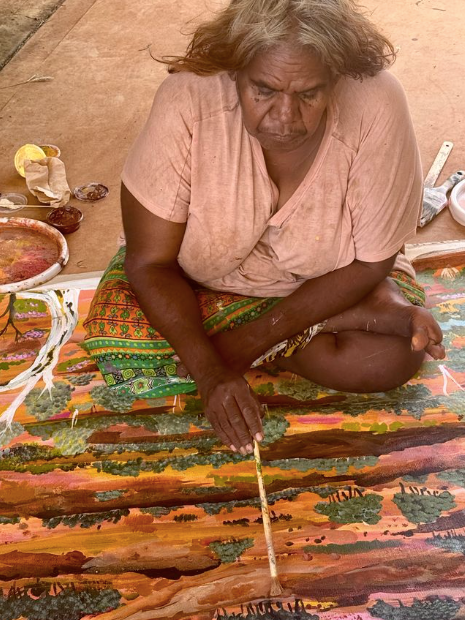
Yesterday Elizabeth Ngwarraye Bonney (at right), from Emily’s country north-east of Alice Springs, won the prestigious $10,000 Vincent Lingiari Art Award.
Around 5000 people come to Desert Mob spending around half a million dollars, $474,305 in 2024 according to Desart, the peak body.
But that is merely a fraction of the movement’s total annual turnover, estimated by the national Parliament at $12m to $20m.
The art centres are independent from each other. Typically they consist of people with solid traditional backgrounds, usually women in their later years, judging by websites. The managers are usually white people, looking after the whitefeller business, including selling.
It's a winning combination.
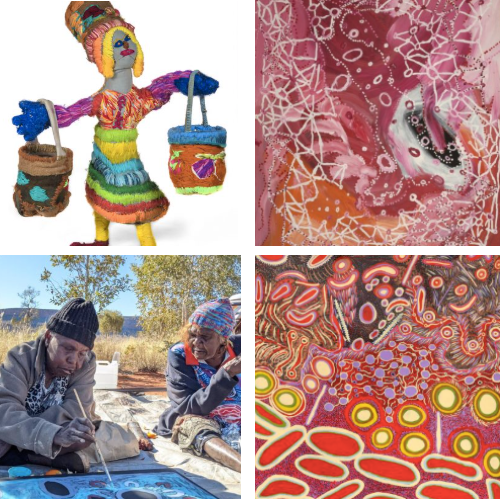
AT TOP (clockwise from top left): Yarrenyty Arltere Artists, Alice Springs; Warlukurlangu Artists, Yuendumu; Minyma Kutjara, Irrunytju; Tjarlirli and Kaltukatjara Artists, Tjukurla.
UPDATE 6:40pm: The Northern Territory Government is securing Desert Mob at Araluen Arts Centre for another five years.