


Rock tourist town had to go, black community grows
By ERWIN CHLANDA
Visitors to Ayers Rock in the early 1970s could see from their motel room the rising sun striking the monolith, or they took a short stroll up a sandhill to watch one of nature’s great spectacles, second only to the sunset on the other side, 12 hours later.
In the evening they went for a pub crawl, from the Chalet to the Red Sands, the Inland and the Uluru, wearing their new “I climbed the Rock” t-shirt.
The four establishments were somewhat below five stars, cobbled together with dongas and sheds. No-one complained about that because in the Bush, that’s where you stay, Mate.
Today the Albanese Government announced a $122m upgrade to the village now called Muṯitjulu, replacing “ageing power, water and sewer infrastructure”.
In the half century in between a lot has happened. The Uluṟu-Kata Tjuṯa National Park became Aboriginal property, whitefeller-way, which blackfeller-way it had been, of course, for a very long time.
The chain has been removed and climbing is now prohibited.
The Federal Government decided that tourism in the immediate vicinity wasn’t good for the the Rock.
The 1973 House of Representatives Standing Committee report said that accommodation inside the park was the "greatest threat" to the national park because its proximity to the monolith made protection of its cultural and biological features extremely difficult and detracted from the Rock's scenic grandeur and sense of remoteness.
Hotels, roads, the airstrip and other infrastructure immediately around Uluru were inconsistent with maintaining the area's natural character, it was claimed.
In the Northern Territory, now self-governing, a 1979 Cabinet paper summarised the problem as the “poor standard of the existing tourist facilities and their proximity to Uluru [are] damaging the national park and preventing satisfactory development of the tourist resource”.
Relocation of tourism facilities was first recommended in 1972 and endorsed in 1973. This was met with angry objections from sections of the tourism industry which wanted the facilities stay in the original site and to be upgraded there.
While Ayers Rock became Uluru the foundations were laid for what is still called Ayers Rock Resort, aka Yulara. The Feds wanted tourism to move away from the Rock, some 25 kilometres, as it turned out.
But they wanted the NT to be the new resort’s principal builder and risk-bearer, financing the project through borrowing and guarantees. Of course, the Feds are responsible for the NT because it is not a state, so indirectly the money came from them.
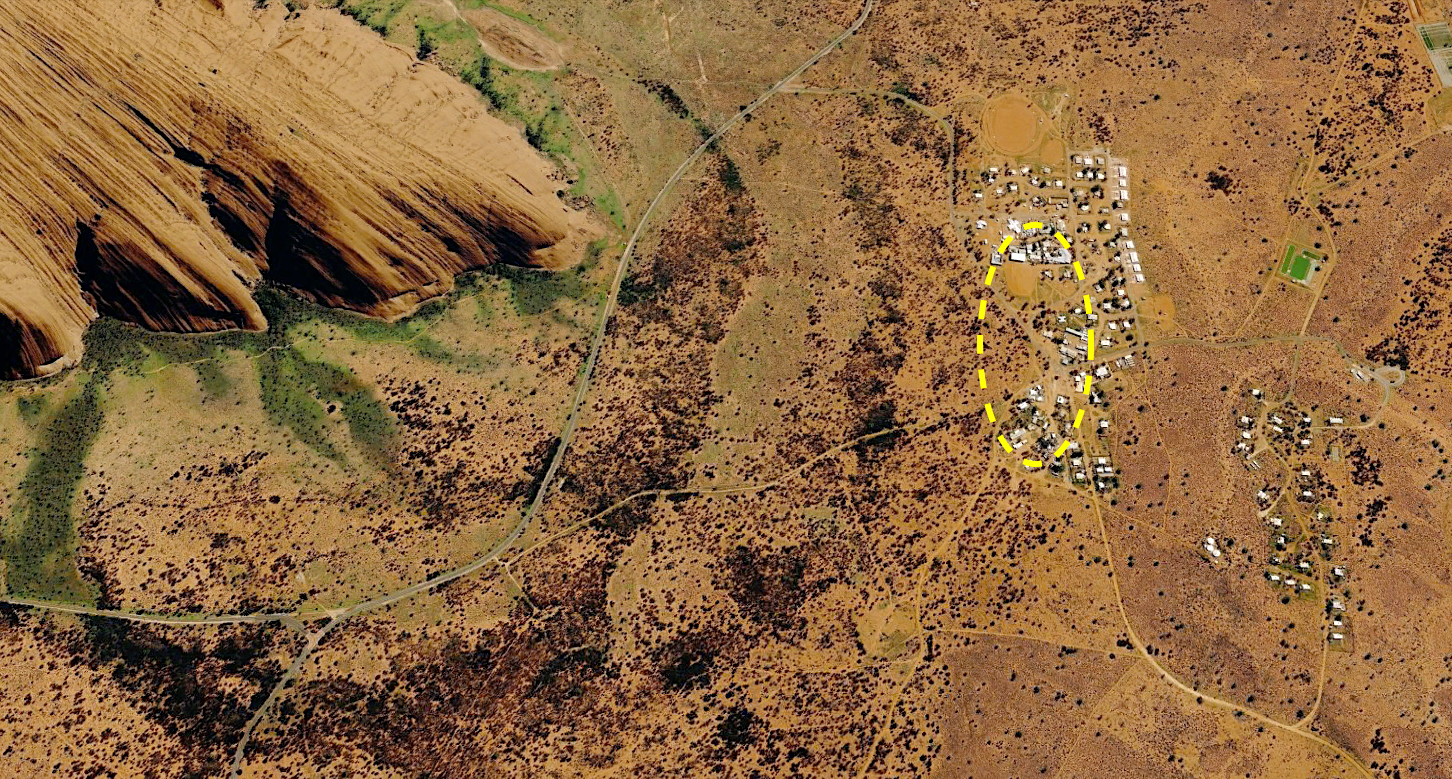
Yulara came online in 1983-84 and the old campground and motels at the foot of the Rock were closed.
And so the way was clear for restoring “the area’s natural character”.
Far from it.
Having stopped the big spending tourists from overnighting in the park the Feds, which manage it, permitted the Aboriginal community to expand within a kilometre of the Rock.
NT Senator Malarndirri McCarthy, Minister for Indigenous Australians, in a release claims it is 1.5 km but she is wrong. She makes it clear that Mutitjulu, from which non-residents are banned, will continue to be encouraged to grow. It now has a population of 300.
Among other advantages the $122m upgrade will enable the NT Government to construct 12 homes.
Federal Minister for the Environment Murray Watt says the upgrades would improve “reliability, resilience and the long-term sustainability of the town’s essential services.
“This significant investment will deliver lasting benefits for residents, create employment and training opportunities, and help ensure the community is supported to thrive, with the upgrades paving the way for new housing and health services,” Minister Watt said, “ensuring the community has the infrastructure it needs for the future.”
What happened to the concerns about environmental effects of too many people near the iconic landmark?
Meanwhile the resort, which has changed hands several times, is obviously scratching its head about what to do for tourists at night. The park closes at 9pm in summer and 7.30pm in winter.

There is Bruce Munro’s Field of Light (above), “more than 50,000 glowing spheres” burning electricity in a place world famous for its kaleidoscope of natural light.
Or maybe the Wintjiri Wiru culinary adventure ($315/adult, $135/child) deep in the desert will turn you on: “With the heart of Australia as the backdrop, a story passed on for thousands of generations, now passes to you. Choreographed drones, lasers, and projections will take flight, lighting up the night sky in a modern, artistic expression of an ancient, Anangu story."
PHOTO at top: The dotted line shows the approximate location and size of the original tourism facilities at the Rock.